


Palacio del Gobierno

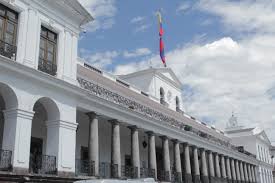
Palacio del Gobierno
Palacio del Gobierno (Calle Garcia Moreno, Quito) – this is the country’s presidencial palace (a.k.a. Palacio de Carondelet). Originally built in 1650 (when it was the seat of the Spanish colonial government), it was burnt down in 1920, and was rebuilt quickly thereafter. Visitors are only allowed to enter parts of the building that are not dedicated to day-to-day governmental activities. Every Monday, there’s a changing of the guards at the plaza facing the Palacio at 11:00 am. Free admission. Hours: 9:00 am – 3:00 pm and 4:00 pm – 7:00 pm (weekdays), 10:00 am – 12:30 pm (weekends) (closed when the President is actually staying there). Note: visitors must have photo ID.
La Compañía de Jesús

La Compañía de Jesús
La Compañía de Jesús (Calle Garcia Moreno y Sucre, Quito) – complete in 1765, this is Ecuador’s most ornate church – considered one of the most significant works of Spanish Baroque architecture in South America. Moorish influences are evident in the church’s interior. A sarcophagus with the remains of Ecuador’s patron saint (Mariana de Jesís de Paredes) can be found in the base of the central altar. Due to earthquakes in Quito, this church endured serious structure damage over the years. The original tower was destroyed by an earthquake in 1859 (rebuilt in 1865), yet to be destroyed again in 1868 (never to be rebuilt). Another earthquake in 1987 prompted rounds of reconstruction between that year and 2005. Admission: $2.00 Hours: 9:30 am – 5:30 pm (weekdays), 9:30 am – 4:30 pm (Saturday), 12:30 pm – 4:15 pm (Sunday).
Museo Mindalae
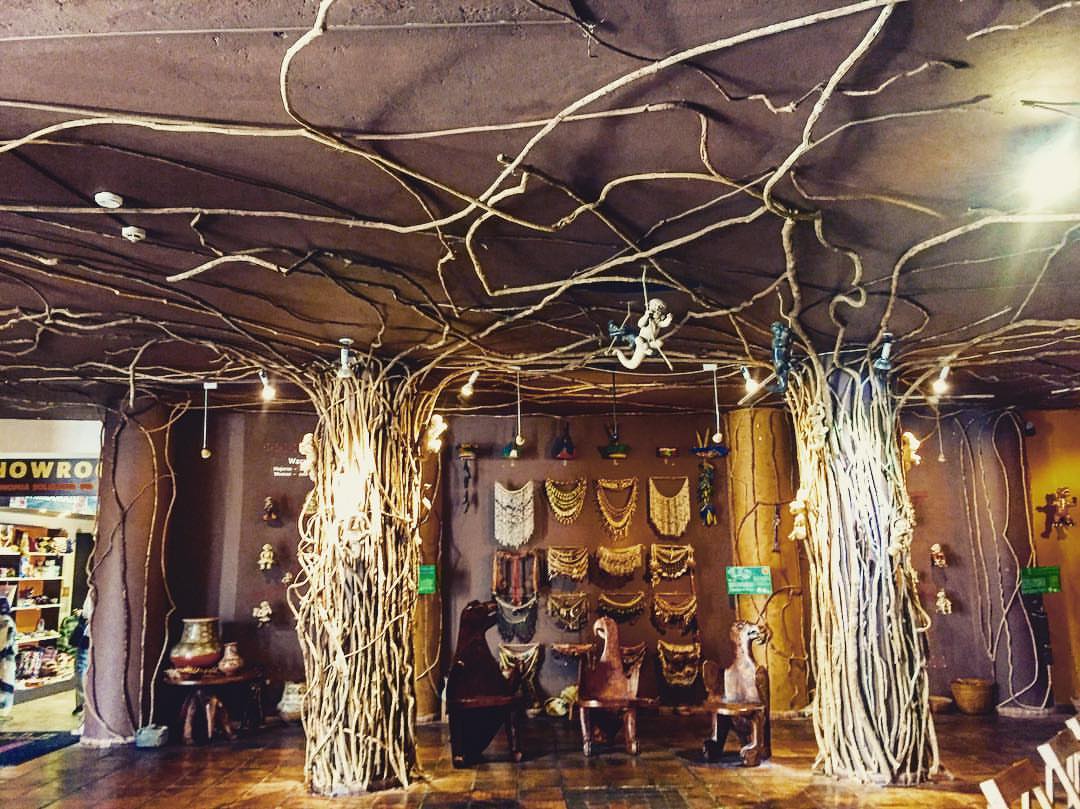
Museo Mindalae
Museo Mindalae (Plaza Yuyú, La Mariscal, Quito) – this museum is dedicated to the country’s ethnic history — celebrating the immense cultural and ethnic diversity of the many nations within Ecuador. The Museum is managed by the Sinchi Sacha Foundation, an organization that supports indigenous cultures, fair trade, craft training and responsible tourism. The name of the museum comes from Mindala, the pre-colonial traders who worked between the different markets in the country.
This museum’s modern building has been designed to celebrate the Sun worshipping traditions of many Andean ancient cultures. The “eye of the sun” opening shines a column of light throughout all five floors of the museum on the summer and winter solstices (June 21st and December 21st), and the equinoxes (March 20th and September 22nd.)
Admission: $3.00 (adults), $1.50 (children & seniors). Hours: 9:00 am – 6:00 pm (weekdays), 10:00 am – 5:30 pm (Saturdays & holidays).
Museo de Arte Colonial
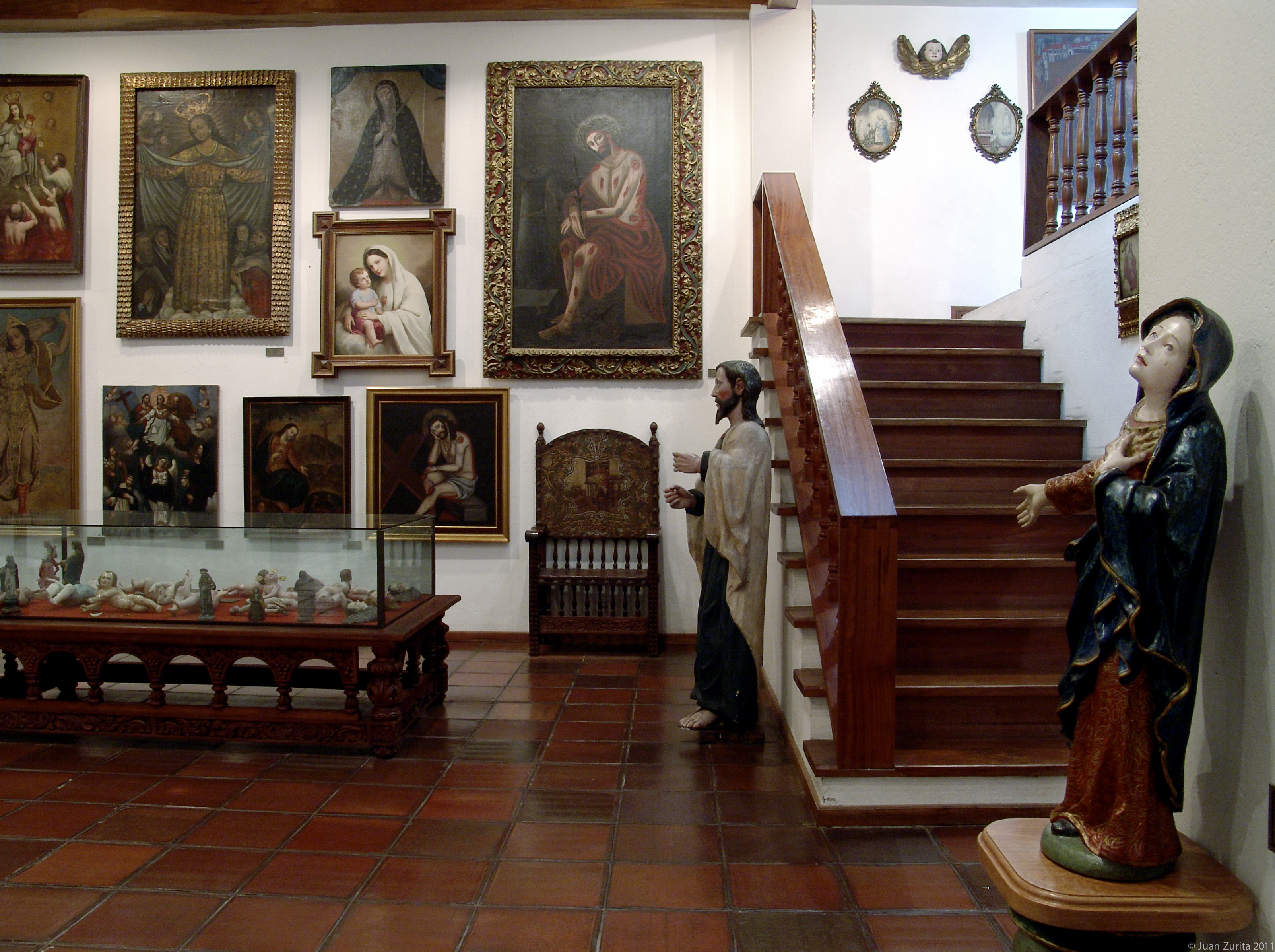
Museo de Arte Colonial
Museo de Arte Colonial (Calles Cuence y Mejía, Quito) – located in a colonial building from the 16th Century, this museum was established in 1914, and houses a vast collection of artwork (from paintings to sculptures going as far back as the 16th century). There is also a section devoted to colonial era indigenous artists. Admission: $2.00 (foreign adults), $1.00 (local adults), $.50 cents (students & seniors), free for children under 12 years go age. Hours: 10:00 am – 6:00 pm (Tuesday – Friday), 10:00 am – 2:00 pm (Saturday).
Capilla del Hombre
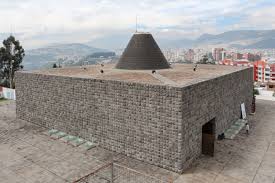
Capilla del Hombre
Capilla del Hombre (Mariano Calvache E18-94 y Lorenzo Chávez, Bellavista, Quito) – located in the Bellavista section of Quito, this structure (“the Chapel of Man”) is actually an art museum put together by Ecuadorian painter Oswaldo Guayasamín – which he dedicated to the peoples of Latin America. Artworks shown there range from murals to sculptures. Admission: US$8 (adult), US$4 (children & seniors). Hours: 10:00 am – 5:00 pm (Tuesday – Sunday).
Museo Nacional
Museo Nacional
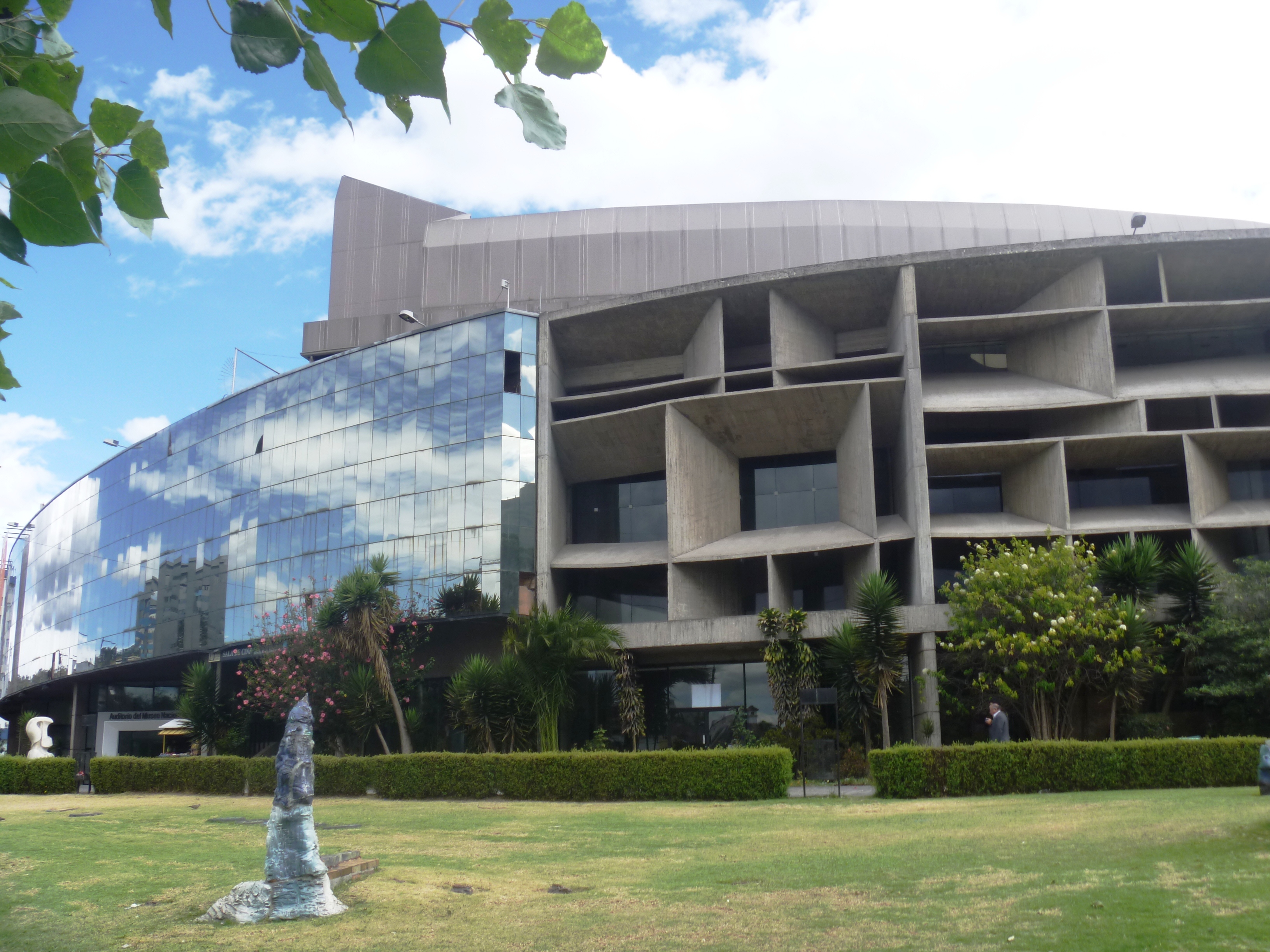
Museo Nacional (Patria, e/Av. 6 de Diciembre y Av. 12 de Octubre, Quito) – founded by the Banco Central de Ecuador and currently managed by the local government’s Ministry of Culture, this museum has a vast collection of artifacts and artwork that span the history of Ecuador, from pre-Columbian (from figurines to gold masks), to the Spanish colonial period. Free admission. Hours: 9:00 am – 5:00 pm (weekdays); 10:00 am – 4:00 pm (weekends).
Museo Guayasamín

Museo Guayasamín
Museo Guayasamín (Bosmediano 543, Bellavista, Quito) – along with the befote-mentioned Capilla del Hombre, this museum houses the collection of renowned Ecuadorian artist Oswaldo Guayasamín (1919-1999). As a longtime political activist, many of his artworks displayed images of class division, political oppression, poverty and prejudice (including his best known painting “The Age of Anger”). Along with that, there’s also his collection of pre-Columbian ceramic, bone, and metal pieces from archaeological sites found throughout Ecuador. Admission: $2.00 Hours: 10:00 am – 5:00 pm (weekdays).
Museo del Banco Central Pumapungo
Museo del Banco Central Pumapungo
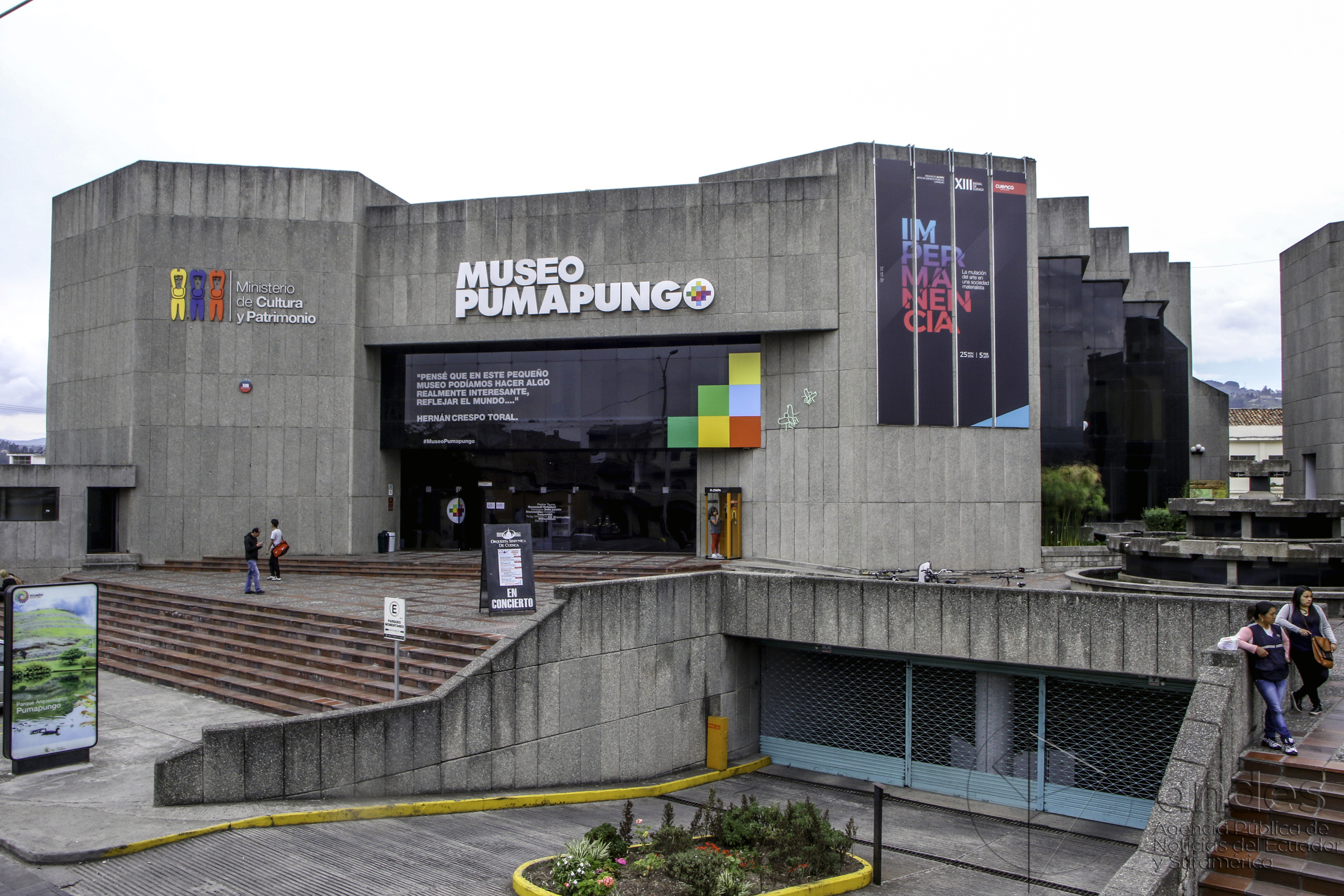
Museo del Banco Central Pumapungo (Calle Larga e/Arriaga y Huayna Capac, Cuenca) – along with a wing that displays more contemporary artworks at this museum’s street level, its upper level features a variety of ítems that reveal the country’s diverse cultures – from indigenous (Indian) to Afro-Ecuadorian (showing the little-known blacks from Esmeraldas province, who were the descendants of African slaves that were brought into the country by the conquistadors). An unforgettable section shows a display of shrunken heads from the Shuar culture of the southern Oriente region. There’s also an outdoor section which display ruins that were once part of the Inca city of Tomebamba. Free admission. Hours: 8:00 am – 5:30 pm (Tuesday – Saturday).
Museo de las Culturas Aborígenes

Museo de las Culturas Aborígenes
Museo de las Culturas Aborígenes (Calle Larga 5-24, e/Hno. Miguel y Mariano Cueva, Cuenca) – this museum, located in provincial town of Cuenca, has over 5,000 archeological pieces from over 20 pre-Columbian Ecuadorian cultures (made of clay, bone, shells, stones, and wood) that go back some 15,000 years. Along with the exhibit areas, there’s a courtyard café where visitors gather and drink the locally-brewed coffee. Admission: $2.00 Hours: 9:00 am – 6:00 pm (weekdays), 9:00 am – 1:00 pm (Saturday).
La Merced
La Merced
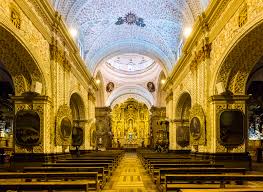
La Merced (Calles Chile y Cuenca, Quito) – this 18th century church is known for its fascinating artwork (including paintings showing volcanoes erupting over colonial-era Quito). This is also another renowned church that went through periods of damage and restorations as a result of earthquakes that it weathered (in particular in 1660). A closer look of this church’s entrance will reveal carvings of the sun and moon as well as bearded heads.
Within the church you will see the statue of Our Lady Mercy as well as many other interesting features. Sparkling white archways and stone pillars as well as an exquisite fountain add to the awe-inspiring atmosphere. The fountain holds a statue of Neptune, a pagan god. On the walls are artworks by Samaniego, Pinto, Hernando da la Cruz and Victor Mideros. The La Merced Church also owns a great library filled with parchment books and other ancient relics. In the second cloister is a museum with a collection of jewels and paintings. Free admission: Hours: 6:30 am – 11:30 am & 3:00 pm – 6:00 pm.


