


El Panecillo

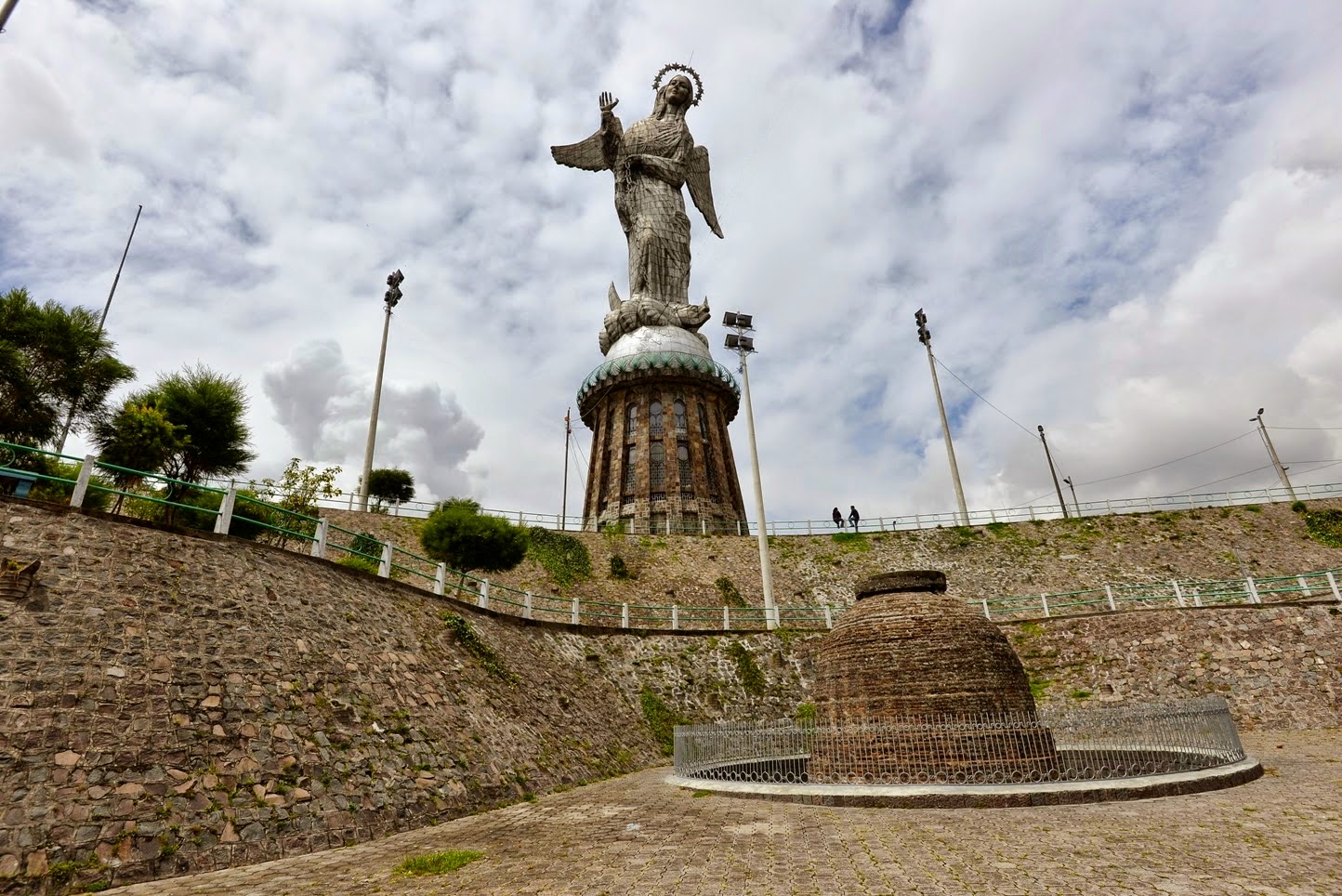
El Panecillo
El Panecillo (Quito) – located south of the city, this 200-meter high volcanic hill overlooking Quito’s Old Town has a statue of the Virgin Mary at it summit (which is reminiscent of the Christ the Redeemer statue at Rio de Janeiro, Brazil). The Virgin Mary statue is 45 meters tall and is made of over 7,000 pieces of aluminum. The statue is located on a one-time pre-Columbian temple used by the indigenous people to worship the sun (which was eventually destroyed by the Spanish conquistadors).
Admission: US$1 (to enter the grounds), US$2 (to enter the statue). Hours: 9:00 am – 6:00 pm (weekdays), 9:00 am – 5:00 pm (weekends).
Basílica del Voto Nacional

Basílica del Voto Nacional, Quito
Basílica del Voto Nacional (Carchi 122, Quito) – this double-spired Gothic cathedral (built in 1920) is located in the historic center of Quito, and is said to be the largest such structure in the Western Hemisphere. Modeled on Paris’ Notre-Dame, the gargoyles used here are actually wildlife found in Ecuador: pumas, monkeys, penguins, tortoises, and condors. Visitors go to the top of the basilica to get a bird’s eye view of the city, and there’s also a café on the third floor. Admission (to visit the top of the basilica): US$2. (foreign adults), US$1 (local adults), US$.50 cents (children & seniors).
About Ecuador
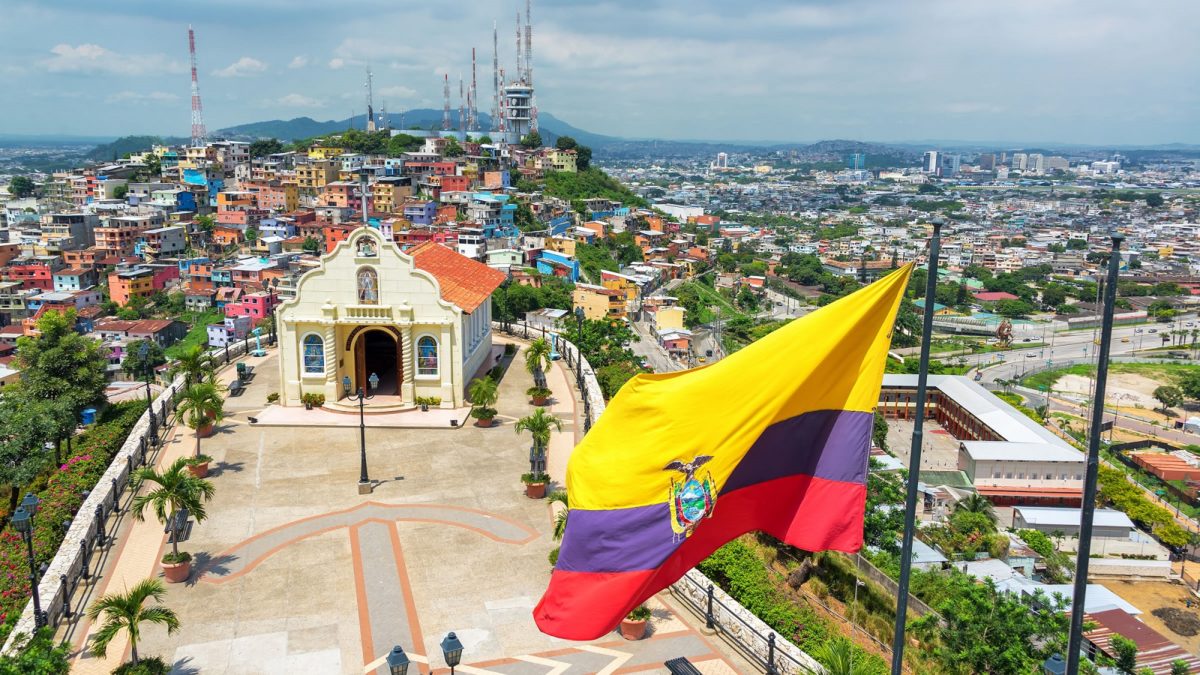
Ecuador
Ecuador, located in a northwest region of South America, has a rich history that goes back to pre-Columbian times, when much of that country was part of the Inca Empire.
All that changed when Spanish conquistadores (led by explorer Francisco Pizarro) invaded Ecuador in 1531. During the early part of Spanish colonial rule, Ecuador was incorporated into the Viceroyalty of Perú. In 1720, Ecuador became part of the Viceroyalty of Nueva Granada.
Due to the independence struggles that both Venezuelan hero Simón Bolívar and his Argentine counterpart José de San Martín waged against Spanish colonial rule in the early 1800s throughout South America, Ecuador became part of the independent nation of Gran Colombia. Still, the vastness of “Gran Colombia” precluded its longevity, due to the impracticality of ruling over such a large territory. As a result, by 1830, the country was broken up into three separate countries. Interestingly, the country originally took up the name “Republic of the Equator” (since it was indeed located along the planet’s equator).
Over time, Ecuador, an agrarian economy well into the 20th century, originally had more territory (extending into the Amazon), but was eventually lost to Peru, due to occasional conflicts with that country. This explains the country’s modest size as of now. Like other Latin countries, Ecuador went through periods of both democratic and military rule during much of the 20th century (especially the 1960s & 1970s, when a variety of concerns — ranging from fears of Cuban Marxist influence in the region, to petroleum concessions – were influential in periodic military interventions at the time).
Even into the 21st century, Ecuador was still not immune to periods of political & economic instability. In 1999-2000, Ecuador’s economy suffered from a banking crisis, with GDP contracting by 5.3% and poverty increasing significantly. In March 2000, the Ecuadorian Congress approved a series of structural reforms that also provided for the adoption of the U.S. dollar as its local currency. Such Dollarization stabilized the economy, and positive growth returned in the years that followed, helped by high oil prices (petroleum being over half of Ecuador’s export earnings), remittances, and increased non-traditional exports.
In addition, a measure of political stability was achieved with the arrival of social democratic politician Rafael Correa into the presidency. He sparked some controversy in international circles by openly embracing other leftist Latin rulers like Venezuela’s Hugo Chavez, Cuba’s Raúl Castro, and Bolivia’s Evo Morales. Correa also sought to move his country away from neoliberal economic planning by reducing the influence of the World Bank and the International Monetary Fund (IMF) over his country’s economy. Correa also went as far as expanding social projects to alleviate poverty in the country, as well as declaring his country’s national debt illegitimate (defaulting on over $3 billion in bonds).
With tourism reaching just 2% of the country’s GDP in 2011, Ecuador has since made efforts to increase its competitiveness as an international tourist destination. This was most notable in early 2015, when the Ecuadorian government spent $3.8 million to run ads promoting its tourism destinations during the heavily-watched Super Bowl (American football) game. The reason for this was simple: after nearby Colombia, America was and still is Ecuador’s second-largest tourism market. Since one in four American tourists visit the Galapagos Islands, Ecuadorian tourism officials wanted to raise awareness of the country’s other destinations.


